The game
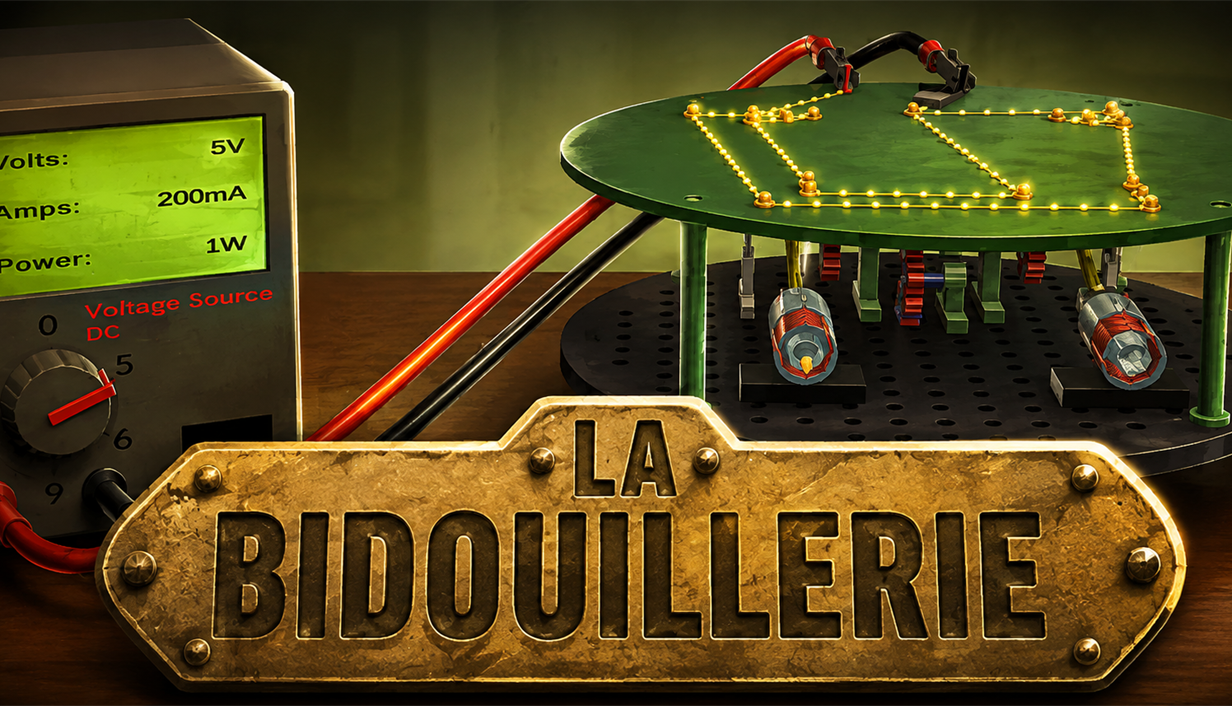
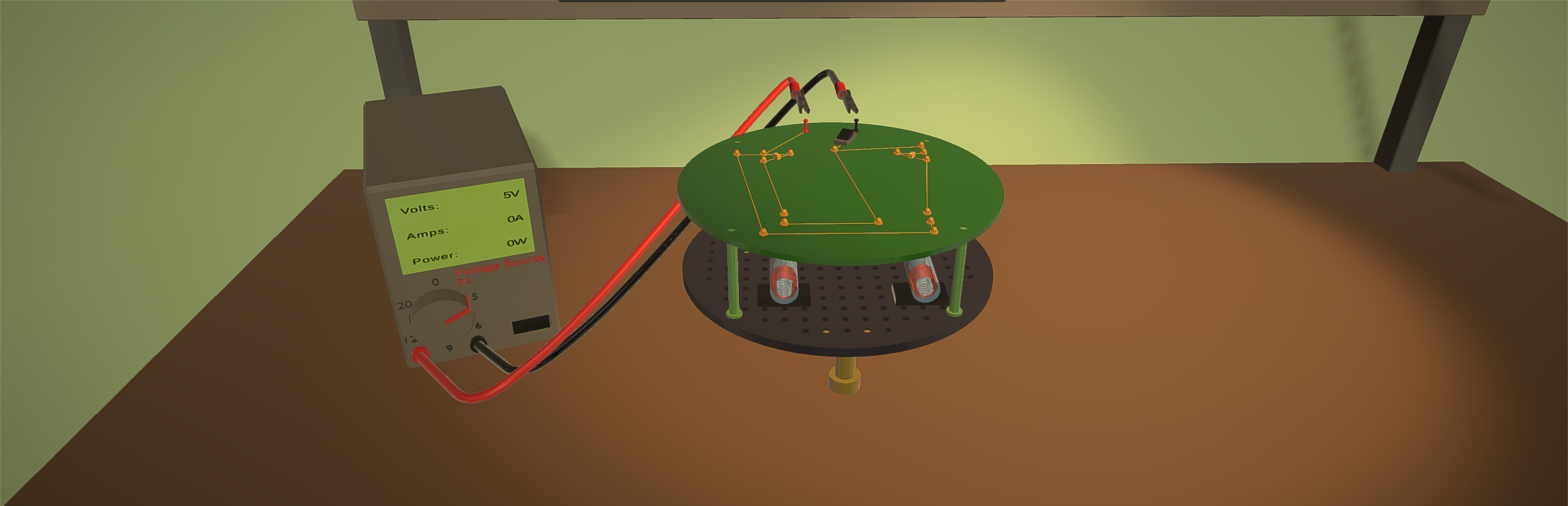
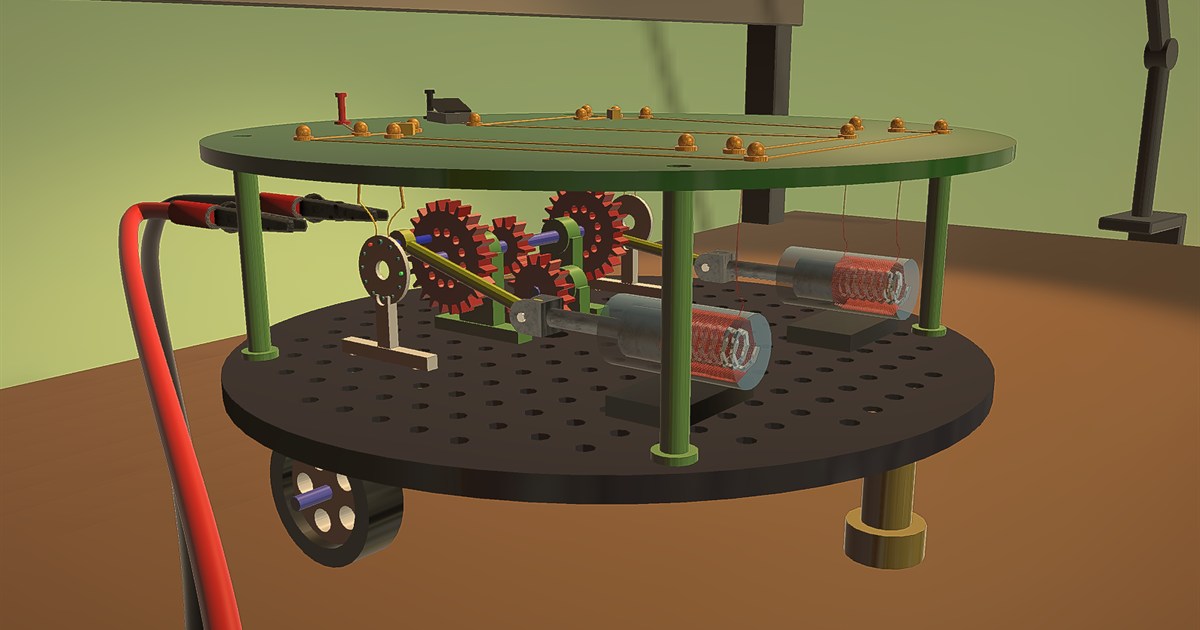
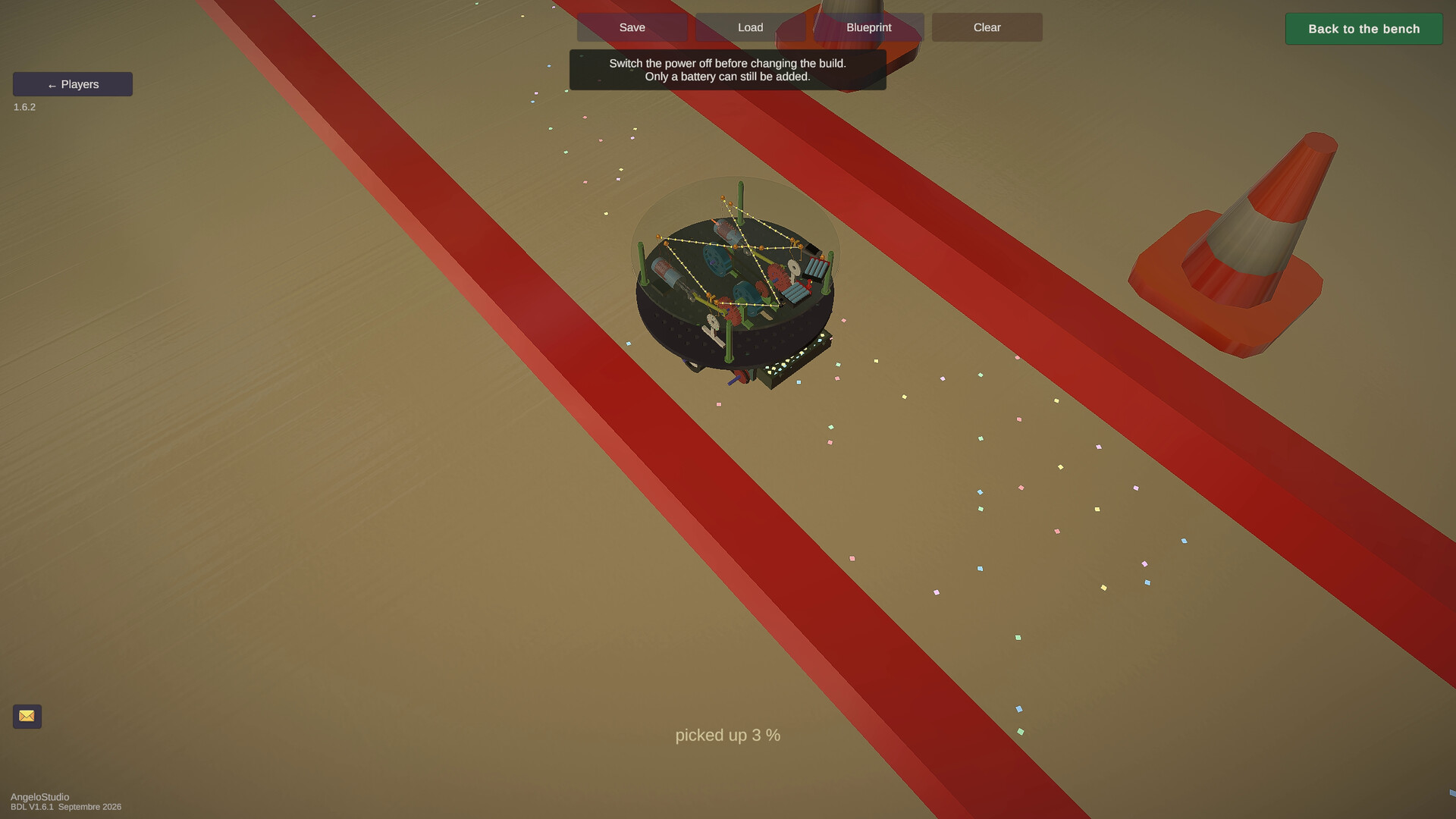
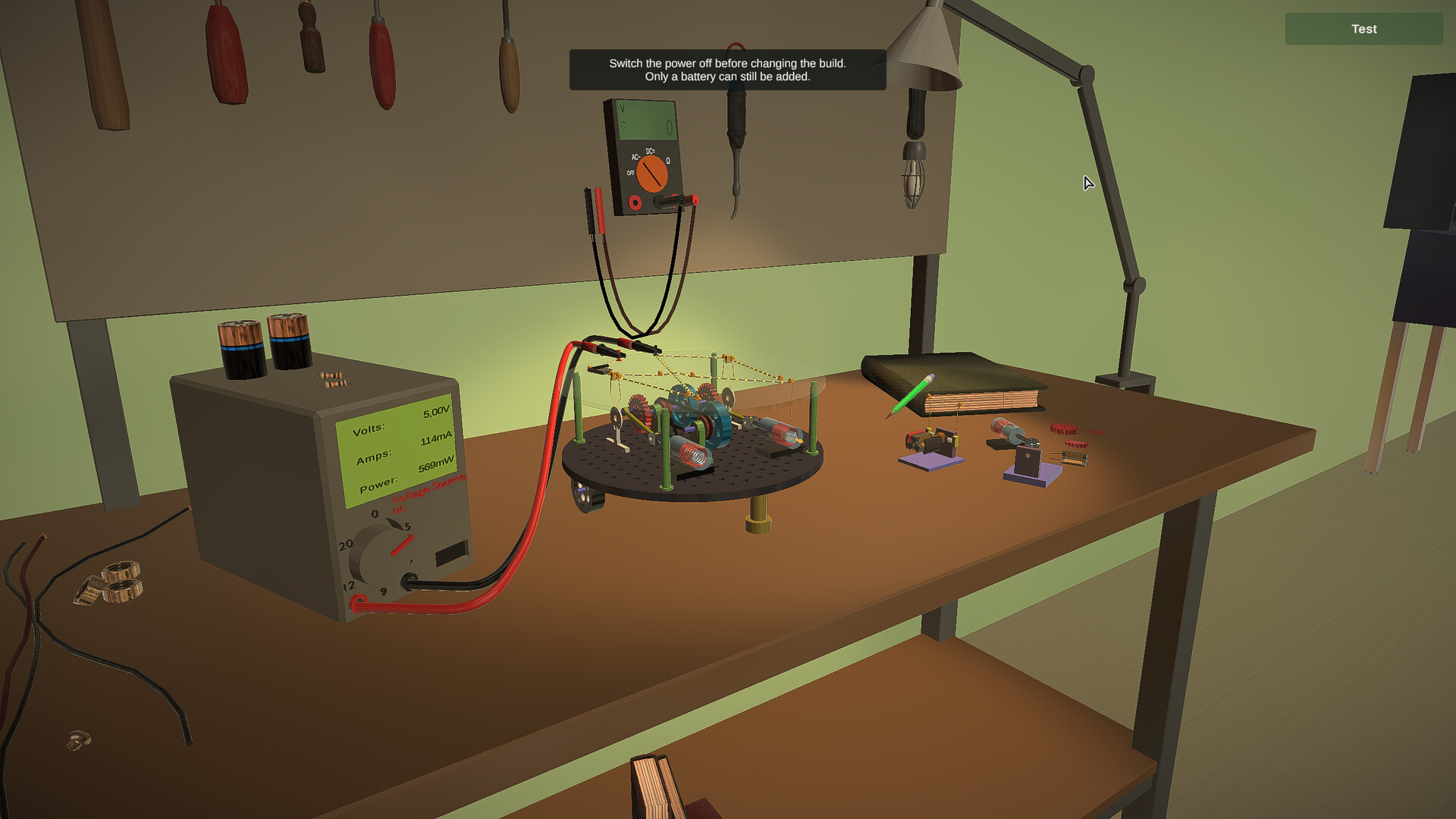
A perforated chassis, a box of parts, and a robot that has to roll. You bolt the mechanics underneath, you wire the electrics on top, you switch it on, and then you find out what you got wrong.
Build with real parts
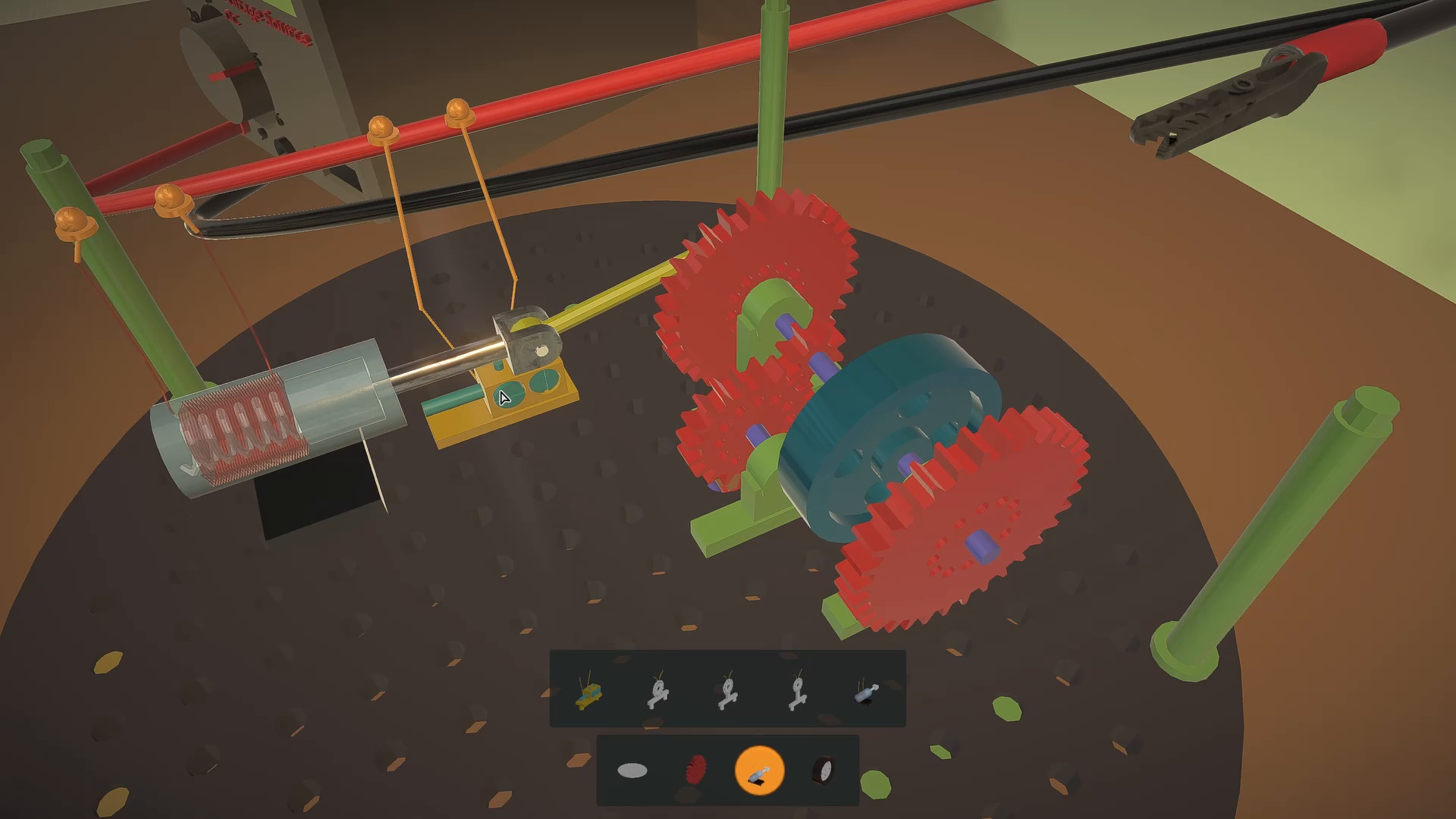
Solenoids, gears from 8 to 32 teeth, connecting rods, crank pins, bearings, shafts, drive wheels, flywheels, a contact breaker, capacitors, a resistor, a switch. Every part has a data sheet, real dimensions and a place where it fits. Nothing snaps magically into position: if two shafts sit a few millimetres too far apart, the gears will not mesh, and the game says by how much.
Nothing is faked
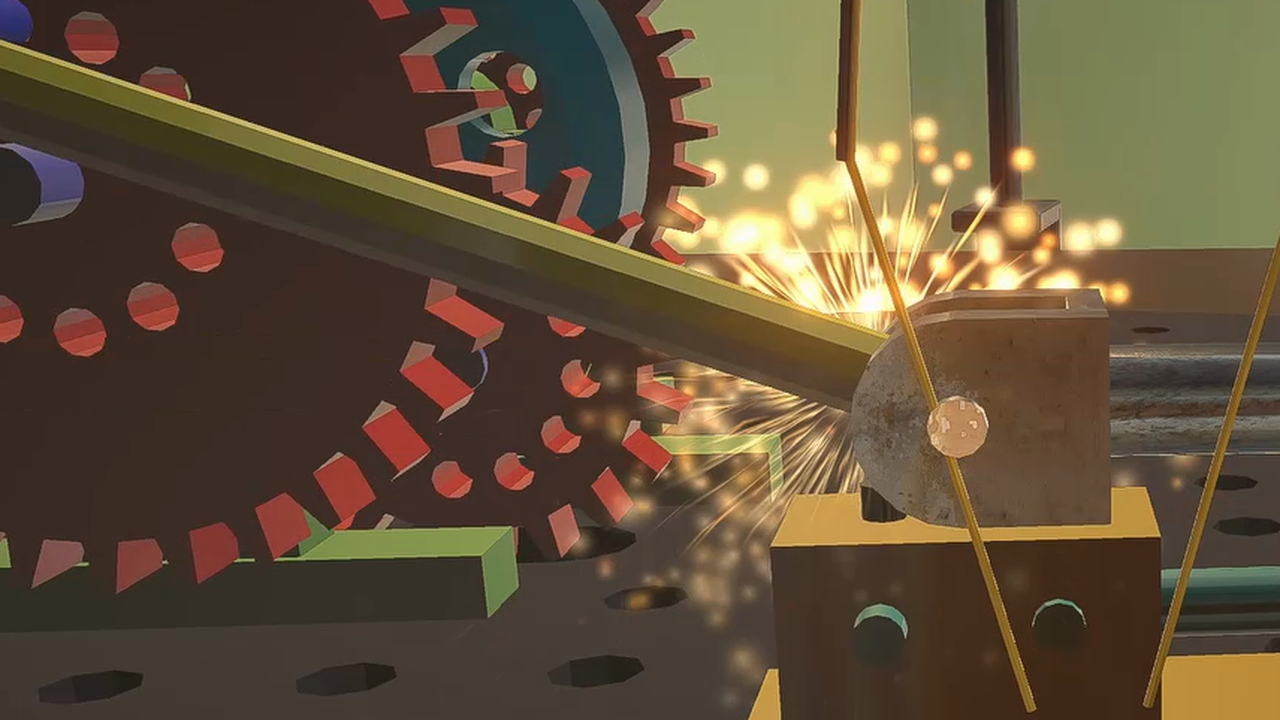
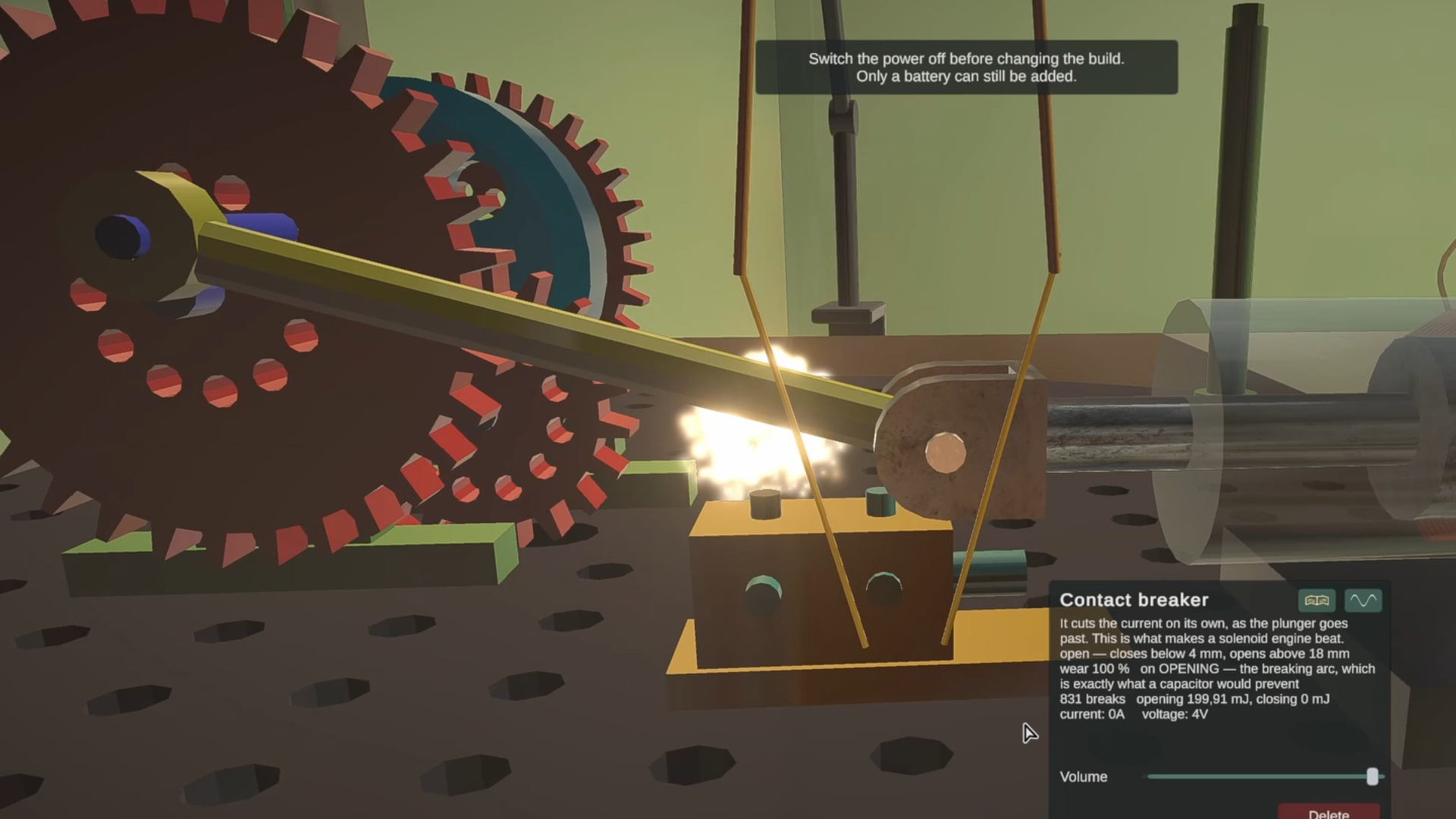
Ten thousand times a second, the game solves a real system of equations to find the voltage at every point of the build and the current in every wire. That is why the machine behaves like a machine. It stalls at dead centre until a flywheel is fitted. Breaker contacts erode spark by spark until they stop conducting, and a capacitor in the right place saves them. The connecting rod tears off if the linkage is stretched too far.
Every failure has a cause
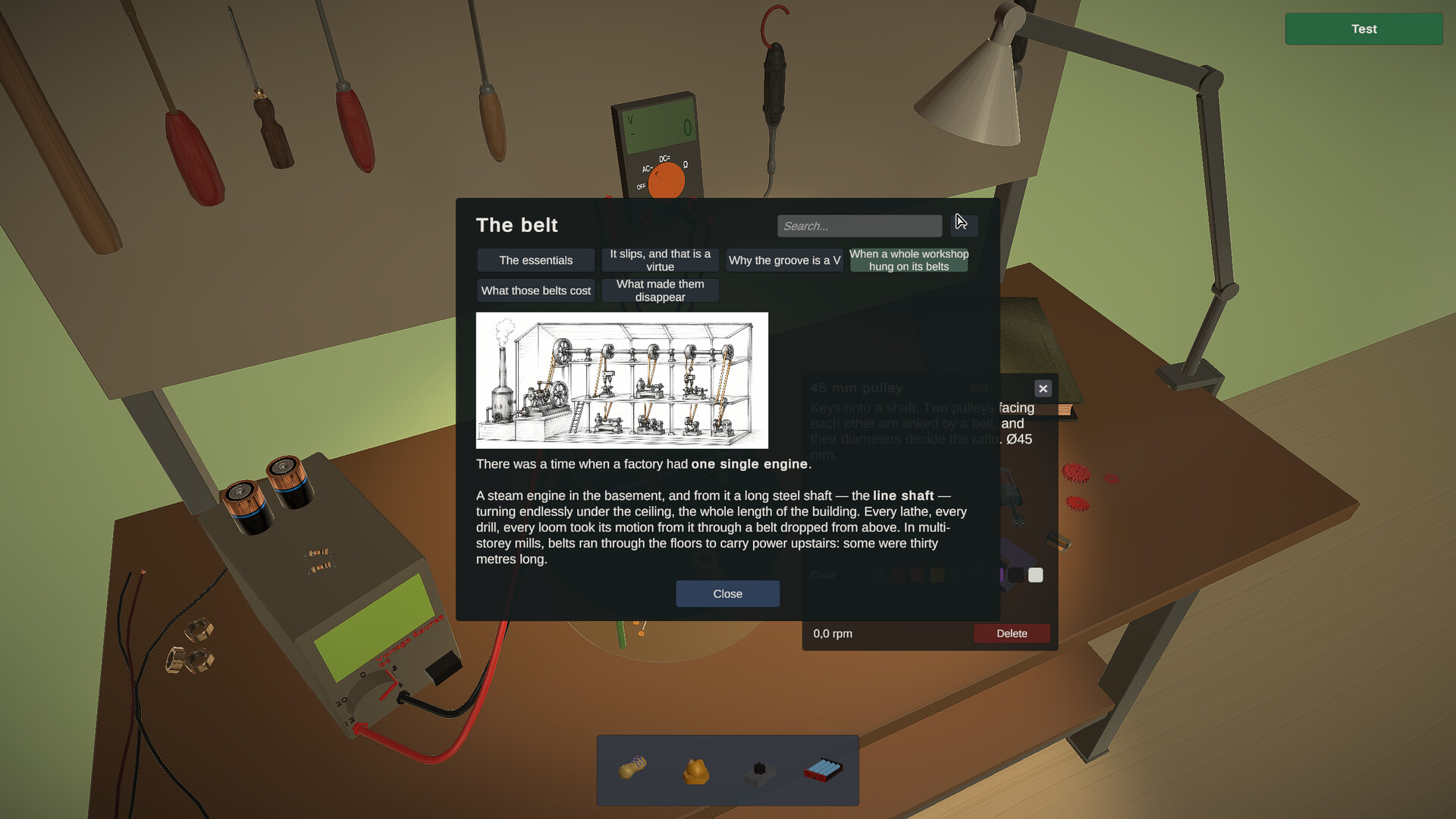
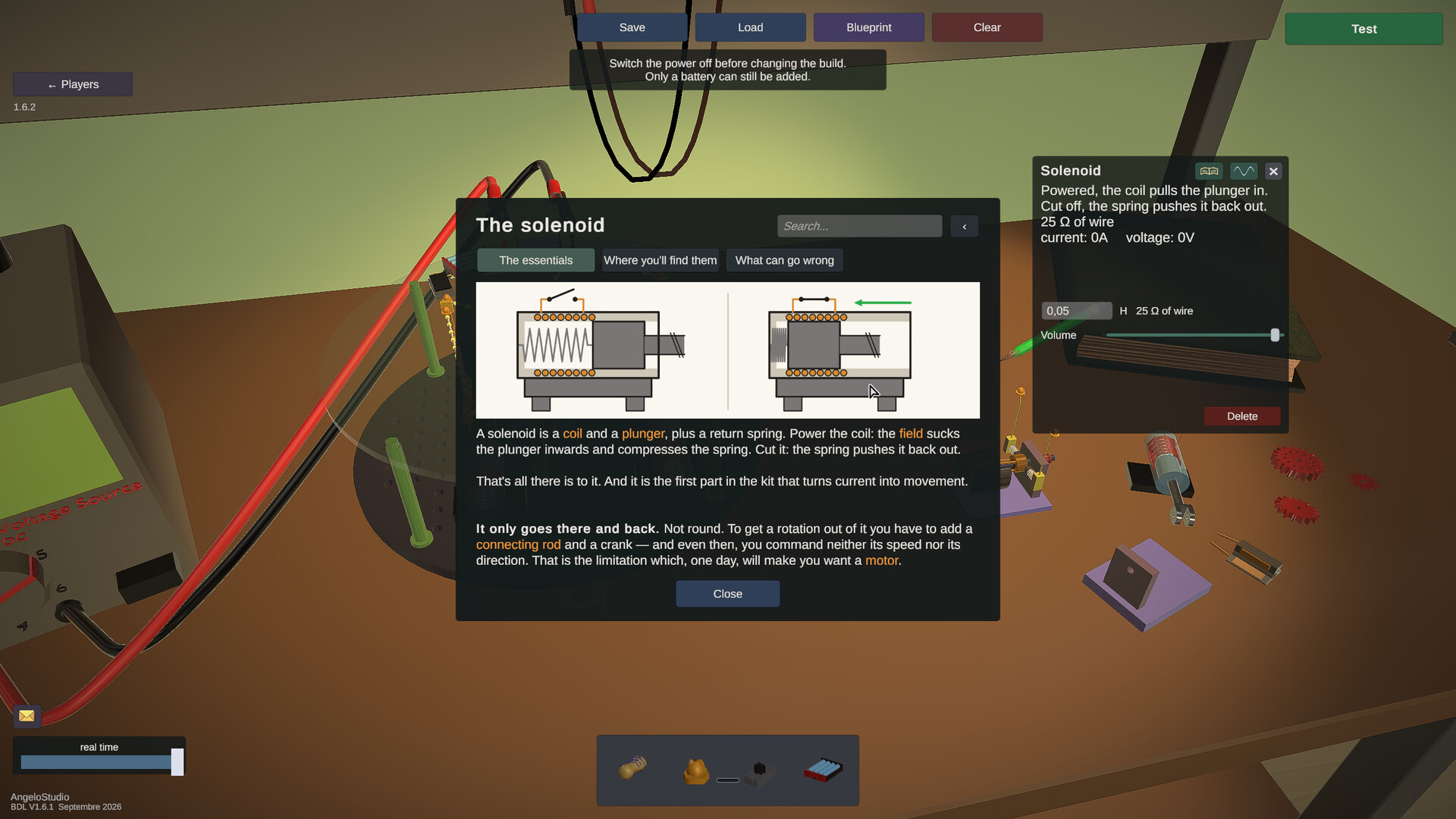
F1 opens the Encyclopaedia: every part, every idea, every fault, cross-referenced. Not a manual but a workshop notebook, which explains why the spark eats the contacts, and what a magnetic field has to do with any of it.
In the demo
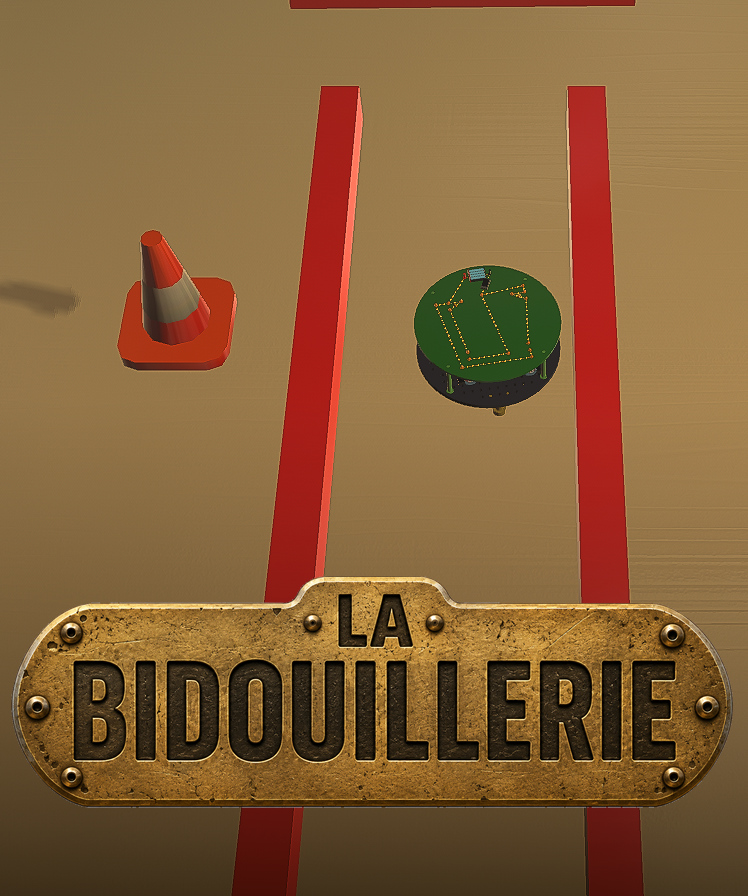
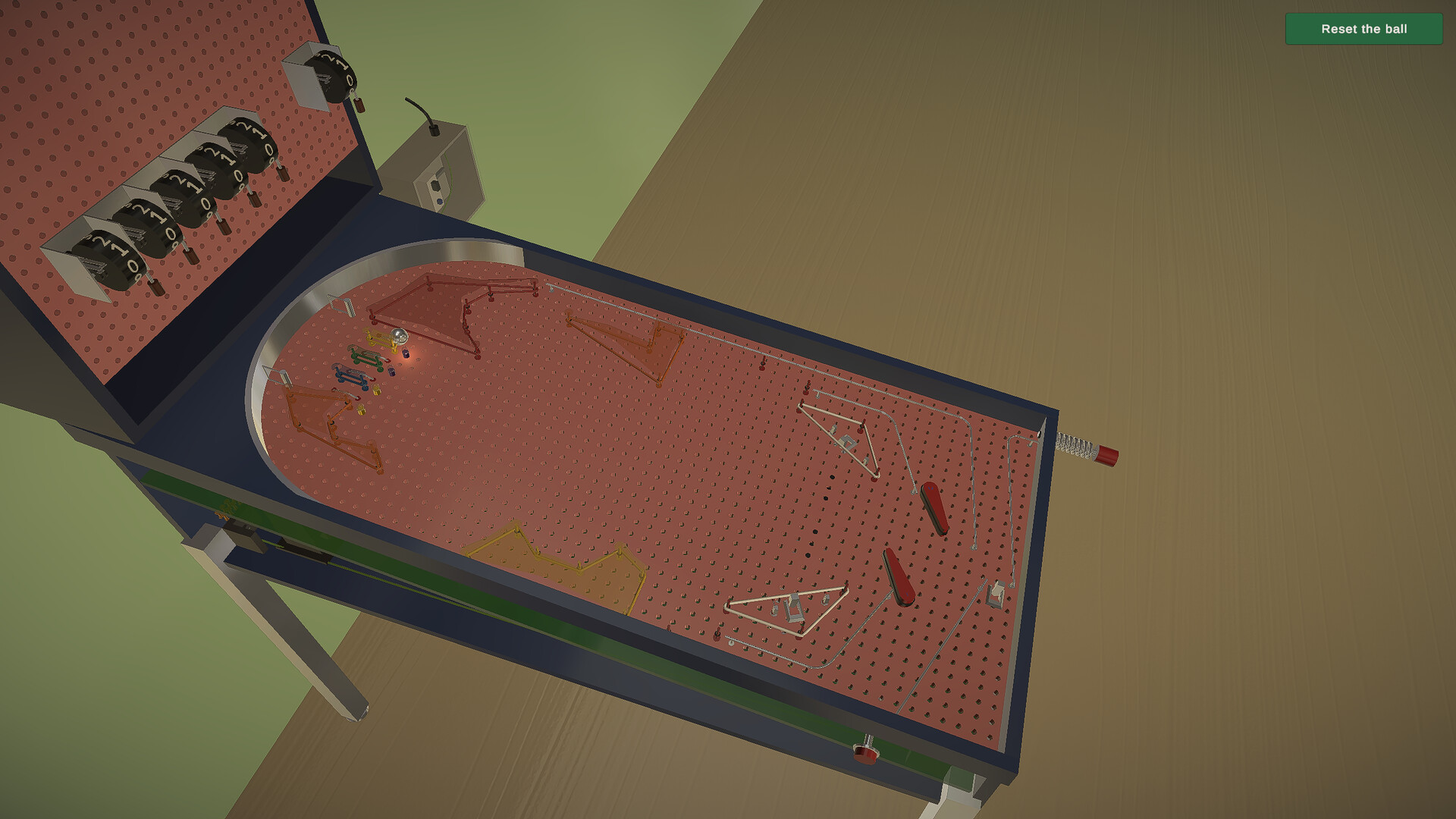
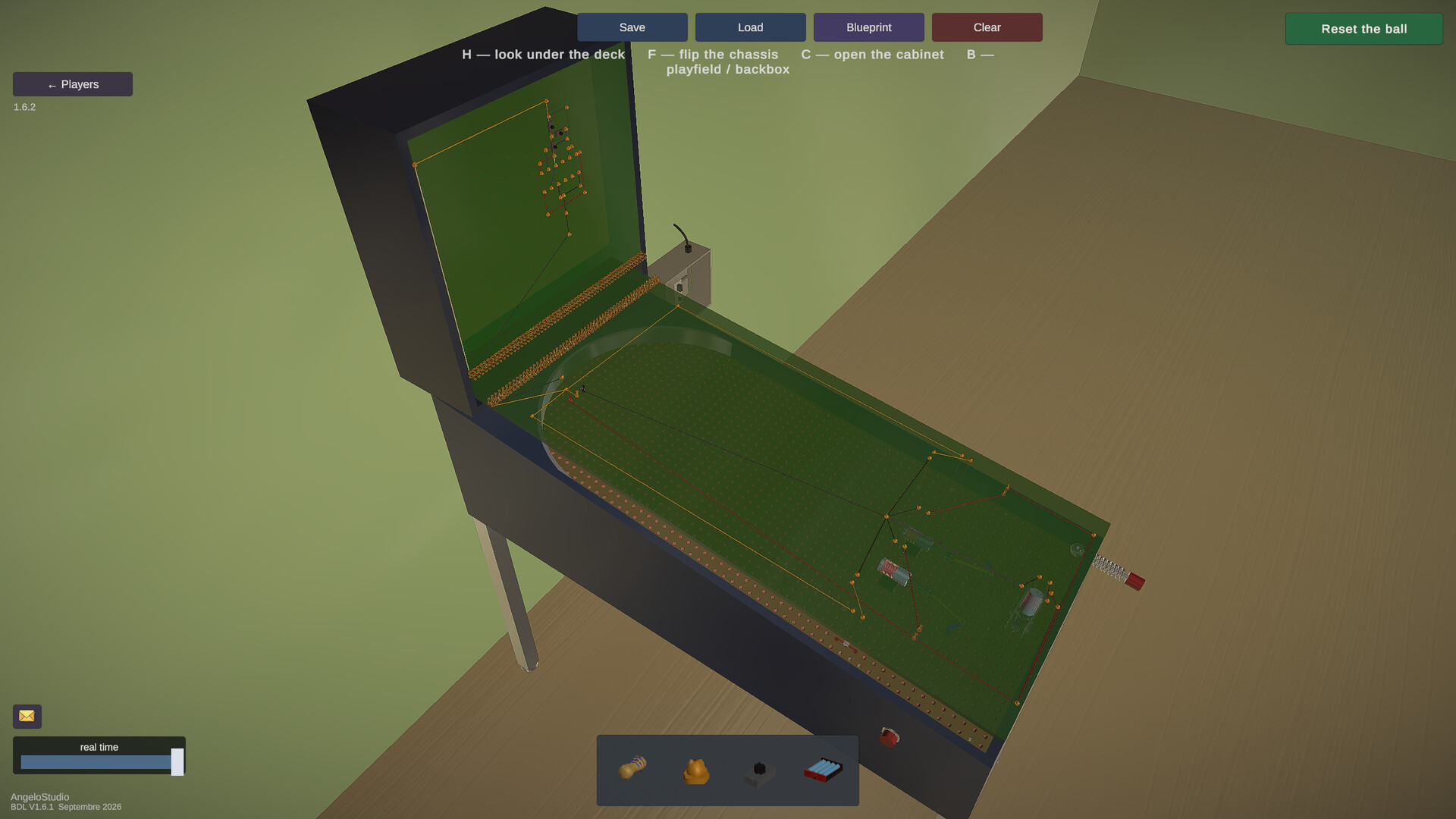
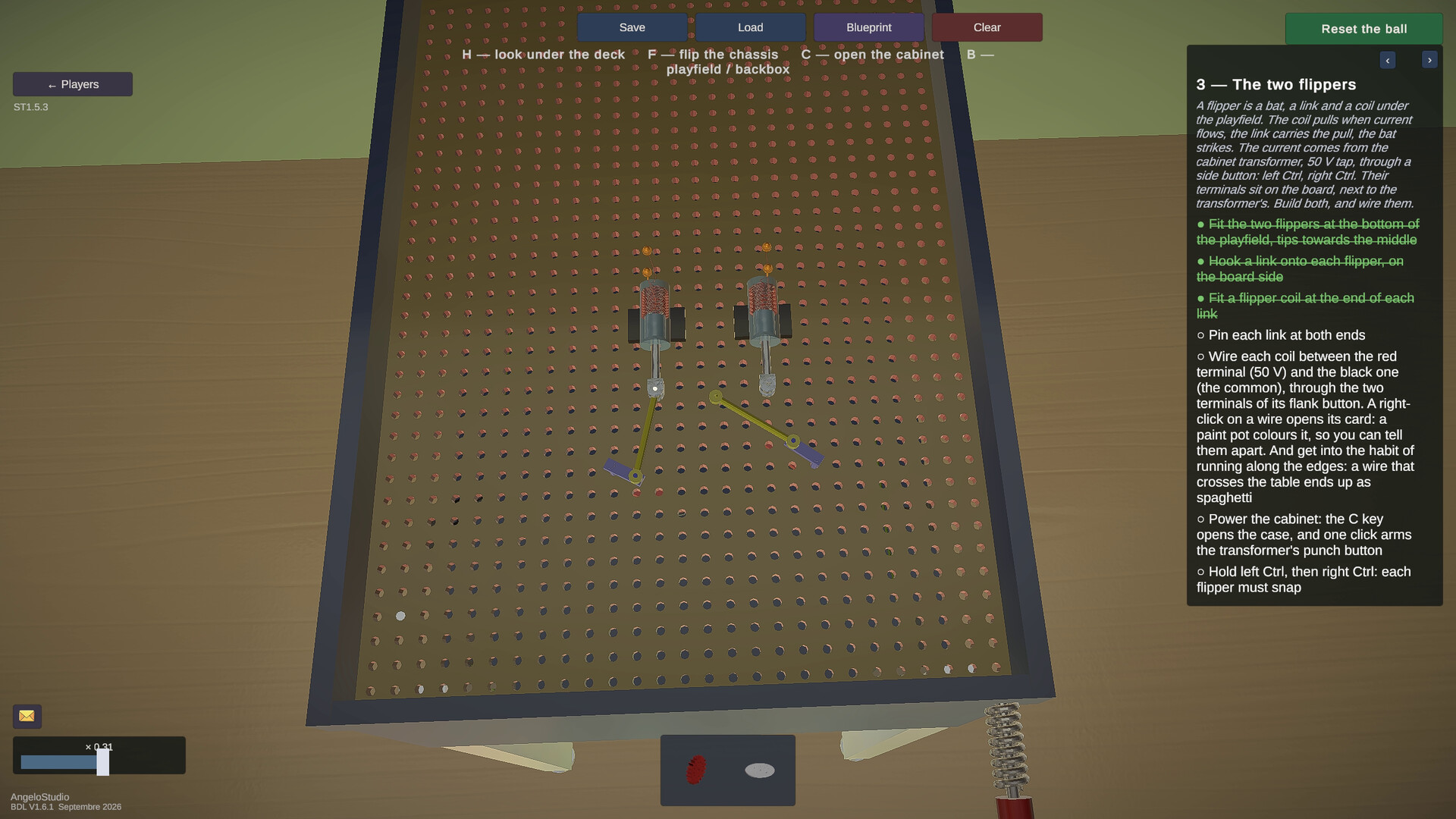
Sixteen missions: twelve to build a robot, from the first coil to a robot that drives down the track on its own, then four to build a pinball table and play it. Then a free sandbox.
In the full game
The demo teaches the parts; the full game makes you earn them. It starts with an electromechanical pinball table (relays, solenoids, contacts), because that is how the story went: the electronics that came right after, transistors and the first integrated circuits, only make sense once you have seen the mechanics they replaced.
You start with a broom and an empty workshop. Cleaning pays, parts cost money, and the catalogue is the tech tree: the more advanced the part, the more it costs, at real prices for real reasons. Each room of the house asks for a different machine: a vacuum robot that reaches under the furniture, one flat enough for the low cupboard, one that actually sucks, for the carpet.
Parts wear out: contacts erode, LEDs blow, a stretched linkage tears its rod off, and you buy again or design better. Behind the doors: the pinball table, the upper floor, and new seasons of parts, DC motors with real brushes, transformers, and the mechanisms that need them.